Have you ever wondered what it takes to consistently brew a truly exceptional cup of coffee right in your own kitchen? As demonstrated in the video above, achieving a delicious, high-quality coffee experience at home is certainly within reach, even for beginners. This guide will delve deeper into the fundamental principles discussed, elaborating on how each step contributes to the final taste of your brew.
From selecting the finest beans to mastering the intricacies of grinding and brewing, the path to making great coffee involves optimizing three core areas. Through understanding these processes, an individual is empowered to transform their daily routine into a gourmet experience. It is often observed that these foundational elements are overlooked, yet their impact on flavor is undeniable.
The Foundation of Flavor: Selecting Quality Coffee Beans
The journey to an outstanding cup of coffee invariably begins with the beans themselves. It is commonly believed that selecting the right coffee beans forms the absolute foundation of your brew, possessing the most significant influence on its ultimate flavor profile. This critical step is frequently underestimated by many.
The Critical Importance of Freshly Roasted Beans
Most coffee enthusiasts are familiar with the idea of fresh ingredients, but the concept of “freshly roasted” coffee beans is often misunderstood. Roasted coffee beans naturally contain hundreds of aromatic compounds that are responsible for their complex flavors. Over time, these delicate compounds begin to degrade and escape, leading to a less vibrant and more muted taste.
For the freshest and most flavorful coffee possible, beans should be consumed within a specific timeframe after roasting. It is generally recommended that beans be used within at least four weeks of their roast date, with an even better experience being achieved within two to three weeks. If a specific roast date is not listed on the packaging, it is often an indication that the beans may not be optimally fresh.
Sourcing these crucial beans can be accomplished in several ways. While some local grocery stores are now stocking freshly roasted options, checking for a visible roast date is always advised. Alternatively, local coffee roasters often provide an excellent source for beans roasted just days prior. For unparalleled convenience and variety, many subscription services, such as Trade Coffee, are available, delivering freshly roasted beans directly to your door on a regular schedule.
Achieving the Perfect Grind for Superior Extraction
Once high-quality beans have been secured, the next vital step in making great coffee is the grinding process. Grinding your beans just before brewing is a non-negotiable step for preserving freshness and unlocking maximum flavor. However, it is not merely about grinding; the consistency of the grind also plays an indispensable role.
Why Grinding Fresh Matters
The moment coffee beans are ground, their internal structure is broken down, exposing a significantly larger surface area to the atmosphere. This increased exposure accelerates the rate at which those precious aromatic compounds oxidize and dissipate. Consequently, pre-ground coffee loses its freshness and flavor much more rapidly than whole beans.
Therefore, two primary factors must be considered when preparing your coffee grounds. Firstly, grinding should ideally occur immediately before the brewing process to maximize freshness. Secondly, achieving a consistent grind size is paramount; this means all the individual coffee particles should be approximately the same size, preventing uneven flavor extraction during brewing.
Burr Grinders vs. Blade Grinders: An Essential Investment
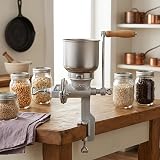
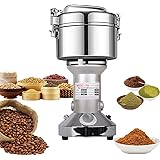
The key to achieving a consistent grind lies in the type of grinder utilized. A burr grinder is universally recommended for superior coffee preparation. These machines employ two abrasive surfaces, or burrs, which are precisely spaced to crush the coffee beans to a uniform size as they pass through just once. This method ensures that each particle is ground evenly, allowing for a balanced extraction of flavors.
In contrast, blade grinders, which are commonly found in many kitchens, operate more like blenders. Coffee beans are simply chopped by rotating blades, leading to a highly inconsistent mix of fine powder and larger chunks. This unevenness results in what is known as uneven extraction, where some parts of the coffee are over-extracted (leading to bitterness) and others are under-extracted (resulting in sourness), ultimately compromising the taste of the final brew.
Burr grinders are available in both electric and handheld models, catering to different budgets and preferences. While high-quality electric burr grinders can represent a significant initial investment, manual handheld versions often provide comparable grind quality at a more accessible price point. For instance, some excellent handheld options are available for around $180, delivering performance equivalent to electric models costing two or three times as much. Even a more budget-friendly handheld burr grinder, such as one priced around $40, will yield significantly better results than any blade grinder, making it a worthy first upgrade for those serious about making great coffee.
It is generally acknowledged that a quality burr grinder is perhaps the most crucial investment for a home coffee setup, assuming espresso is not a primary focus. With proper care, a good grinder is expected to last for many years, providing a consistent foundation for countless delicious cups of coffee.
Brewing Techniques: Unlocking Diverse Coffee Profiles
With freshly roasted and perfectly ground beans in hand, the final step involves the actual brewing process. Different brewing methods will highlight various characteristics of the coffee, yielding distinct flavor profiles and body. Each method necessitates a specific grind size to optimize extraction and achieve the desired results.
The Pour-Over Method: A Balanced & Traditional Cup
The pour-over method is favored by many for its ability to produce a clean, bright, and nuanced cup of coffee that often tastes quite traditional, similar to what one might expect from an automatic drip machine but with enhanced clarity. This method typically uses a paper filter, which absorbs many of the coffee’s oils, resulting in a lighter body.
For pour-over brewing, a medium-fine grind size is generally required, often compared to the texture of a slightly finer sand. Various pour-over brewers exist, but the Kalita Wave is frequently recommended for beginners due to its forgiving design and relatively low cost. The brewing process involves several key steps that contribute to the final flavor.
Initially, water should be brought to a boil, with good tasting water (such as filtered tap water) being essential. The paper filter is then rinsed with hot water, a step that serves to eliminate any papery taste and preheat the brewer and mug. After discarding the rinse water, the ground coffee is added to the brewer. A consistent ratio of coffee to water is paramount for repeatable results; a widely accepted starting point is a 16 to 1 ratio (e.g., 20 grams of coffee to 320 grams of water). The use of a digital scale is almost essential for accurately measuring these components and achieving consistently delicious coffee.
The brewing then begins with the “bloom phase,” where about one-eighth of the total water is gently poured over the grounds, ensuring full saturation. This phase, lasting approximately 30 seconds, allows carbon dioxide trapped within the fresh coffee to escape. This outgassing is crucial because it enables water to flow more evenly through the grounds during subsequent pours and prevents excessive sourness from being infused into the coffee. Following the bloom, the remaining water is slowly added in a circular motion, ensuring even extraction. If the water level approaches the top of the cone, a brief pause of 10-15 seconds is advisable to allow drawdown before continuing the pour. The entire brewing process should ideally take between 1.5 to 2.5 minutes; adjustments to grind size may be needed if the flow rate is significantly outside this window (finer for faster, coarser for slower). A slight shake of the brewer towards the end can help ensure all water passes through the grounds, leading to complete extraction and a truly delightful cup of coffee.
French Press: Embracing a Full-Bodied Experience
For those who appreciate a coffee with a rich, full body and a robust mouthfeel, the French Press method is an excellent choice. Unlike pour-over, the French Press does not use a paper filter, allowing the natural oils and fine sediments to remain in the brew, contributing to its distinctive texture. To minimize sediment while maximizing flavor, a specific technique, such as James Hoffmann’s method, is often employed.
A coarser grind, comparable to coarse sand, is typically used for French Press to prevent over-extraction and excessive bitterness. After preheating the French Press vessel and your mug with hot water, the medium-coarse grounds are added. A 16 to 1 water-to-coffee ratio is again a good starting point. All the hot water is added at once, ensuring all grounds are fully saturated. The lid is then placed on the French Press to retain heat, and the coffee is allowed to steep for four minutes.
After the initial steep, the surface of the coffee is stirred to free any floating grounds. The foam, which can contribute bitterness, is then carefully skimmed off the surface. Crucially, the lid is replaced, and the coffee is allowed to settle for at least another five minutes without pressing the plunger. This gentle approach encourages the grounds to settle to the bottom, resulting in a much cleaner cup. Finally, the coffee is gently poured into a mug, using the plunger merely as a filter to keep the settled grounds in the vessel, rather than pressing them down. This careful method ensures a full-bodied yet remarkably clean French Press experience.
Cold Brew: Smoothness for the Iced Coffee Lover
Cold brew stands out for its exceptionally smooth, low-acidity profile, making it a favorite for iced coffee enthusiasts. This method involves steeping coffee grounds in cold or room-temperature water for an extended period, which extracts flavors differently than hot brewing, resulting in a naturally sweeter and less bitter concentrate.
Similar to French Press, a coarse grind is ideal for cold brew. While a French Press can be used, any jar or bowl with a lid can serve as a brewing vessel. Cold brew is often made in larger batches for convenience. For instance, using 40 grams of ground coffee with 480 grams of water results in a larger yield. A slightly stronger water-to-coffee ratio, such as 12 to 1, is often preferred for cold brew. This ensures the concentrate is robust enough to not become overly diluted when ice is added.
All the water (cold or room temperature) is added at once, ensuring the grounds are fully submerged and stirred if necessary. The container is then covered and allowed to steep for a significant duration, typically 12 to 16 hours, at room temperature. Once the steeping process is complete, the concentrate is strained to separate the grounds. This can be achieved using a paper coffee filter, cheesecloth, or even the French Press plunger acting as a filter. The resulting cold brew concentrate can be enjoyed immediately over ice or stored in the refrigerator for up to about a week, maintaining its freshness and delightful taste for daily enjoyment. The lower temperature of extraction is believed to draw out fewer acidic and bitter compounds, contributing to its characteristic smoothness, making it a perfect option for making great coffee for warmer days.
Unlocking Greatness: Your Coffee Questions Answered
Why are fresh coffee beans so important?
Freshly roasted coffee beans are crucial because they contain hundreds of aromatic compounds responsible for complex flavors. Over time, these delicate compounds degrade, leading to a less vibrant taste.
Why should I grind my coffee beans right before brewing?
Grinding fresh preserves the coffee’s flavor and aroma by minimizing exposure to air. Once ground, coffee loses its freshness much faster due to increased surface area.
What type of grinder is best for making great coffee?
A burr grinder is recommended because it crushes beans to a consistent, uniform size, ensuring even flavor extraction. Blade grinders, which chop beans, create an inconsistent grind that can lead to bitter or sour coffee.
What are a few common ways to brew coffee at home?
Common methods include Pour-Over for a clean, bright cup, French Press for a full-bodied experience, and Cold Brew for a smooth, low-acidity concentrate. Each method highlights different characteristics of the coffee.