Crafting a truly authentic and delicious German Altbier can be a challenging endeavor for many homebrewers. Achieving that quintessential balance of intense maltiness, firm bitterness, and a remarkably dry finish often requires precise control over ingredients and process. If you’ve been searching for a comprehensive guide to demystify this classic amber ale, look no further. Complementing the detailed process shown in the video above, this article delves deeper into the intricacies of brewing Altbier, providing insights and expanded explanations to elevate your next batch.
Unpacking the German Altbier Style
The Altbier, hailing from Düsseldorf, Germany, stands out as a unique and rewarding beer style. While sometimes compared to a Vienna Lager due to its amber hue and malty character, the Altbier distinguishes itself as a bitter amber ale with a distinctly dry finish. The name “Altbier” itself translates to “old beer,” historically referring to its adherence to older brewing methods, specifically the use of ale yeast fermented at cooler, more lager-like temperatures. This “hybrid” approach results in a clean, crisp profile often associated with lagers, yet with the robustness of an ale.
Expect a rich, malty foundation, often showcasing notes of bread, nuts, and a subtle toastiness, expertly counterbalanced by a pronounced hop bitterness. The delicate interplay between these elements is what defines a truly great German Altbier. This style is not about showcasing extreme flavors but rather achieving a harmonious and exceptionally drinkable beer.
1. Dialing in Your Water Profile for Altbier Perfection
Water chemistry plays a pivotal role in brewing, particularly when aiming for specific regional styles like the German Altbier. The video highlights a target water profile, which is crucial for achieving both the desired flavor extraction and mash pH. Here’s a breakdown of the suggested mineral additions and their impact:
- Calcium (50 ppm): Essential for enzyme function during mashing, yeast health, and protein coagulation. Calcium also contributes to a crisper mouthfeel.
- Sodium (15 ppm): In small amounts, sodium can enhance the perception of sweetness and roundness, complementing the malt character. Too much can lead to a salty taste.
- Sulfate (110 ppm): This mineral accentuates hop bitterness and contributes to a drier finish, which is highly desirable in an Altbier.
- Chloride (50 ppm): Chloride enhances malt flavors and provides a perception of fullness or softness. The 110 ppm sulfate to 50 ppm chloride ratio here (<2:1) supports a balanced profile that slightly favors bitterness but still allows malt to shine.
- Bicarbonate (added via Pickling Lime/Baking Soda): Important for buffering mash pH. Roasted malts, even the small amount of pale chocolate in this recipe, can significantly drop mash pH. Maintaining a mash pH typically between 5.2-5.6 is critical for optimal enzyme activity, which dictates sugar conversion and ultimately, the fermentability and flavor of your wort.
To achieve this profile, the video suggests adding calcium chloride, gypsum, Epsom salt, pickling lime, and baking soda to the mash tun. For the hot liquor tank (HLT), only calcium chloride, gypsum, and Epsom salt are needed, as the roasted malts are not present there to lower the pH.
2. The Essential Altbier Grain Bill: A Foundation of Malt Complexity
The backbone of any Altbier is its grain bill, meticulously designed to deliver that intense maltiness without becoming cloyingly sweet. For this German Altbier recipe, a combination of base and specialty malts works in synergy:
- Base Malts (Munich Malt & Pilsner Malt):
- Munich Malt: This malt is a powerhouse for rich, bready, and toasty flavors, forming the core malty character of the Altbier.
- Pilsner Malt: Added to provide fermentable sugars while contributing to the signature dry finish. A 50/50 split between Munich and Pilsner is a solid starting point, allowing for later adjustments based on desired malt intensity or dryness. Increasing Munich will lead to more malt character, while more Pilsner will enhance dryness.
- Specialty Malts:
- Caramel Munich 1 (around 45 Lovibond): This caramel malt adds complexity with notes of rich bread, nuts, and a touch of toast. Its relatively light color ensures it contributes flavor without dominating the amber hue.
- Pale Chocolate Malt (less than 2% of total grain bill): Utilized primarily for color adjustment, pushing the beer into the desired amber range. It’s crucial to use a very small amount to avoid introducing strong roasted or coffee flavors, which are not traditional for Altbier.
Understanding the contribution of each malt allows brewers to fine-tune their recipe, ensuring the balance and depth characteristic of a classic Altbier.
3. Mastering the Mash: Extracting Sugars with Precision
The mashing process is where starches in the grains are converted into fermentable sugars. For this Altbier, the following profile is recommended:
- Mash-in at 152°F (60 minutes): This temperature favors beta-amylase activity, which produces more fermentable sugars, contributing to the dry finish expected from an Altbier. A 60-minute rest ensures complete conversion.
- Mash-out at 168°F: After the main mash, the temperature is raised to 168°F. This step effectively denatures the enzymes, “locking in” the sugar profile. It also reduces the viscosity of the mash, making sparging (rinsing the grains) more efficient and improving sugar extraction. The hot liquor tank is heated to 176-177°F to facilitate this temperature rise in the mash tun.
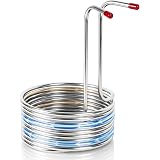
During mashing, a recirculation system, often involving a HERMS (Heat Exchange Recirculating Mash System) coil as shown in the video, is employed to maintain a consistent temperature throughout the grain bed. This ensures even conversion and optimal sugar extraction.
4. Sparging and Boiling: Preparing the Wort for Fermentation
Once mashing is complete, the wort is separated from the spent grains through sparging. This involves rinsing the grain bed with hot water (from the HLT) to extract remaining sugars. The wort is then transferred to the boil kettle.
The boil is a critical stage lasting 90 minutes for this Altbier recipe. During this time, several important transformations occur:
- Sterilization: Boiling sterilizes the wort, eliminating any wild yeasts or bacteria.
- Hop Isomerization: Hops added during the boil release alpha acids, which isomerize to become bitter compounds.
- Hot Break Formation: Proteins coagulate and fall out of solution, contributing to beer clarity.
- Concentration: Water evaporates, concentrating the wort’s sugars and flavors.
- DMS Reduction: Undesirable sulfur compounds (DMS precursors) are volatilized and driven off.
5. Hop Selection for Authentic Altbier Bitterness and Aroma
Hops in a German Altbier provide balance to the malt and contribute a noble hop character in the aroma and flavor. The video details two distinct hop additions:
- Bittering Hops (60-minute addition): Spalt Hops
- Spalt is a traditional German Noble hop often used for bittering Altbiers. It provides a clean, refined bitterness.
- Alternatively, any high alpha acid hop that imparts a clean bitterness, such as Magnum, can be used. The goal is to achieve 30-35 IBUs (International Bitterness Units) at the 60-minute mark. This level of bitterness is firm enough to balance the substantial malt profile but not overwhelming.
- Flavor and Aroma Hops (later addition, as specified by the brewer): Hallertau Mittelfruh
- Hallertau Mittelfruh is a classic German Noble hop known for its mild, spicy, floral, and slightly earthy aroma and flavor. These characteristics are integral to the Altbier style.
- Other German Noble hops like Tettnanger or Saaz (though Czech, often used similarly) could also be employed to achieve that distinctive Noble hop character.
- The recommendation is to add half an ounce per 5 gallons, with an allowance to increase to three-quarters of an ounce for a more pronounced hop presence, but not exceeding that for style authenticity.
6. Whirlpool and Knockout: Clarity and Health in Your Brew
After the boil, two crucial steps prepare the wort for fermentation: whirlpooling and knockout.
The **whirlpool** process, as shown, involves circulating the wort to create a vortex. This motion helps consolidate hops, hot break material, and other trub (sediment) into a cone at the center of the kettle. This prevents these solids from being carried over into the fermenter during knockout, contributing to a cleaner fermentation and clearer final product. The process involves 10 minutes of active whirlpooling followed by 10 minutes of settling.
**Knockout** is the rapid chilling of the wort from near-boiling to fermentation temperature (64°F in this case) using a heat exchanger. This rapid cooling serves several vital purposes:
- Prevents Infection: Reduces the time the wort spends in the “danger zone” where wild yeasts and bacteria thrive.
- Promotes Cold Break: Rapid cooling causes proteins and tannins to coagulate and drop out of solution (cold break). This is explicitly shown in the video as a critical step for achieving crystal clear beer and preventing chill haze, an undesirable cloudiness that can appear when beer is chilled.
- Optimizes Yeast Health: Chilling to the correct temperature allows yeast to be pitched at their ideal starting conditions, preventing off-flavors from stressed yeast.
- Oxygenation: Oxygen is injected during knockout as yeast requires oxygen for healthy cell reproduction in the initial stages of fermentation.
An original gravity reading of 1044 at this stage indicates the sugar concentration before fermentation begins, a key metric for recipe consistency.
7. Fermentation Finesse: The Kölsch Yeast Approach for Altbier
The fermentation phase is where yeast transforms wort into beer, defining much of its flavor and aroma profile. For this Altbier, a specific approach is used:
- Yeast Strain: White Labs German Kölsch Ale yeast (WLP029). This choice is insightful. While Altbier is an ale, it’s considered a “hybrid” style because it aims for a cleaner, more lager-like profile without the prominent fruity esters typically associated with warmer ale fermentations. WLP029 is known for its high attenuation and ability to produce crisp, clean flavors that accentuate hop bitterness, making it an excellent choice for a traditional Altbier.
- Fermentation Temperature (64°F): Fermenting this ale yeast at a cooler temperature, typically 64°F, is key. This lower temperature actively limits the production of fruity esters and other by-products that would detract from the desired clean, German character. Maintaining consistency at this temperature is paramount for achieving the stylistic goals.
- Diacetyl Rest (raise to 72°F): After the gravity reaches approximately 1014, the temperature is raised to 72°F. This warmer period, known as a diacetyl rest, allows the yeast to reabsorb and metabolize diacetyl (a compound that tastes like butterscotch or popcorn) and other undesirable fermentation by-products. This step is crucial for achieving a clean, crisp finish free from off-flavors.
- Cold Crash (33°F): Once fermentation and the diacetyl rest are complete, the beer is rapidly cooled to 33°F. Cold crashing helps settle remaining yeast and other suspended particles, leading to greater clarity and a smoother flavor profile.
8. The Altbier Experience: From Tank to Taste
After fermentation, diacetyl rest, and cold crashing, the German Altbier is ready for its final stages before enjoyment. The beer is transferred to a bright tank, where it is carbonated to 2.5 volumes of CO2. This carbonation level provides a pleasant effervescence that lifts the aromas and contributes to the overall drinkability. Finally, the beer is kegged and, after a period of conditioning, is ready for a taste test.
The sensory evaluation highlights the success of this brewing process: crystal clear, a beautiful amber color with an off-white head, strong malt aroma with nutty and bready notes, and a firm yet balanced bitterness that lingers into the aftertaste. This careful attention to every step, from water chemistry and grain selection to precise fermentation control, culminates in a truly rewarding Altbier.
From Grist to Glass: Your Altbier Brewing Q&A
What is a German Altbier?
A German Altbier is a traditional amber ale from Düsseldorf, known for its balanced blend of malty flavor, firm bitterness, and a distinctly dry finish. The name “Altbier” means “old beer,” referring to its older brewing methods.
What kind of grains give Altbier its flavor and color?
Altbier uses a foundation of Munich and Pilsner malts for rich, bready flavors, and a small amount of specialty malts like Caramel Munich and Pale Chocolate malt to achieve its characteristic amber color and added complexity.
Why is the fermentation temperature important for Altbier?
Fermenting Altbier at a cooler temperature, typically 64°F, is crucial to limit fruity flavors often associated with ales. This helps the Altbier achieve its desired clean, crisp, and more lager-like profile.
What is a diacetyl rest in Altbier brewing?
A diacetyl rest is a short period where the beer’s temperature is raised slightly after most fermentation. This allows the yeast to clean up a butterscotch-like flavor called diacetyl, ensuring a clean and crisp final beer.